














UPC CFI, RD Nordic-Baltic, 31 July 2025: Standing to sue of an unregistered exclusive licensee
25-12-2025 Print this page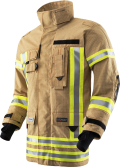
Relevance of the determination of the applicable law (Article 24 UPCA). With respect to infringements that have taken place or at least begun before the 1 June 2023, the different approaches outlined above will often lead to the same result, especially if/when the UPC – based on the extensive harmonisation – presumes that the national substantive law in question and the UPCA corresponds. […] From a practical point of view, it seems like the main difference between these two approaches often would be that the approach applied by Local Division Mannheim would take national law into account not only when it is more favourable to the alleged infringer, but also when it is more favourable to the right holder/licensee. In this context, something should also be said about damages and, in particular, applicable limitations on the right to such damages. The national laws of the contracting member states contain different types of provisions that limit the possibility to receive damages for infringements that took place a long time ago. […] the Court does not need to take a final position on these questions in this decision, but the Court will come back to this topic when discussing damages and communication of information.
Standing of TEXPORT as (unregistered) exclusive licensee (Article 47.2 UPCA). The Court notes that TEXPORT has submitted a document dated 9 January 2024, i.e. three days before its Statement of Claim was filed, where the patent proprietor – who also is managing director/CEO of TEXPORT – confirms that TEXPORT is the exclusive licensee of the Patent and that TEXPORT is entitled to bring actions before any Court, especially the UPC, under the same circumstances as him, the patent proprietor.
Claim construction (Article 69 EPC). Claim element (layer 5) “the knitted material consists of a waffle structure” : there is no basis at all for concluding that the person skilled in the art would interpret the term waffle structure in the Patent as being limited to knitted fabrics that that have been created by the specific knitting technology mentioned in the ISO standard. The Court concludes that the term waffle structure in claim 1 shall not be understood as limiting the scope of the Patent to fabric structures that comprise a knitted fabric that looks the same on both sides, or where the waffle structure is created by a specific knitting technology. Instead, the feature waffle structure means that the knitted fabric shall have a three-dimensional structure with recesses/hollows between walls/ridges, thereby giving a cellular/latticed/grid-like appearance on at least one side.
Direct literal infringement (Article 25 UPCA). Participation in a public tender in Portugal constitutes a patent infringement (offering) in (at least) Portugal, even though SIOEN is based in Belgium and despite that the offer was not accepted. It is also obvious that the offer in question originated from SIOEN, or at least was submitted by the local distributor only after SIOEN had agreed to manufacture and deliver the products in question if the tender was won. Hence, SIOEN has also infringed the patent in this regard.
Injunction covering all Contracting Member States except Romania and Malta (Article 34 UPCA). Request was submitted before Romania ratified the UPCA and TEXPORT has not made an application to amend the claim to cover also Romania. Furthermore, TEXPORT has submitted an extract from the EP register regarding the legal status of the Patent, which shows that the Patent is in force in all Contracting Member States except Malta. This means that Romania and Malta needs to be excluded from any injunction. The fact that the public needs firefighter suits do obviously not lead to the conclusion that SIOEN should be allowed to continue infringing the Patent, especially since it is possible to get access to firefighter suits without buying infringing products from SIOEN. Hence, an injunction shall be granted.(Article 63 UPCA, Article 3 Enforcement Directive).
Liability for damages of (unregistered) exclusive licensee (Article 68 UPCA). SIOEN was fully aware of the existence of the Patent and has acted culpably. It is […] in this context irrelevant that TEXPORT is not registered as an exclusive licensee in the national patent registers. The Court finds that the request to only decide on damages in principle shall be granted. Thus, the amount of the damages shall be determined in the subsequent proceedings under Rule 125 et seq. RoP. In this situation, also the time periods to be taken into account shall be determined in the subsequent proceedings. The relevant time periods and the potential application of national legislation that may affect the right to damages will depend on information referred to in Article 67 UPCA, which only will be made available to the claimant after the decision on the merits. Hence, the declaration of right to damages shall not specify the time periods to be taken into account. Interim award of damages of € 50.000 (R. 119 RoP).
Order to communicate information (Article 67 UPCA, R. 191 RoP). The claimant also has a right to information needed to verify the information and to calculate the damage. No order to publish decision on SIOEN’s website (Article 80 UPCA). TEXPORT has not shown sufficient reasons for ordering the requested publication of the decision on SIOEN’s websites. Hence, the request shall be dismissed.
Corrective measures – recall and destruction (Article 64 UPCA). The Court finds that a request for recall and destruction normally shall be granted, in order to effectively avoid further acts of infringement. It is for the infringer to present facts and proof of any circumstances, e.g. based on proportionality, justifying that the Court dismiss the request or concludes that it is sufficient to amend the infringing goods. Requests do not include consumers or firefighters/end-users.
Proportionate recurring penalty of € 1.000 for each day of delay (Article 63.2 UPCA, Article 82 UPCA). The Court notes that the obligation to comply with these kinds of orders normally are made subject of a recurrent penalty payment and finds no reason to deviate from this standard. However, the Court agrees with SIOEN that the amounts suggested by TEXPORT are unnecessarily high. Instead, the penalty payment for non-compliance with the injunction is set to up to EUR10 000 per violation, and the penalty payments for non-compliance with the orders on communication of information, recall and destruction are set to up to EUR1000 for each day of delay.