














UPC CFI, LD Düsseldorf, 14 January 2025: infringement in case of an activatable feature
07-02-2025 Print this page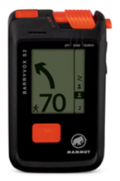
Revocation action unfounded, patent infringed. Direct infringement of product claim (Article 25(a) UPCA) even though voice control feature requires activation.
If a device in the offered or offered or sold is not yet suitable for making use of all the features of the patent claim because the customer must first activate certain functions, the alleged infringer must accept responsibility for the conduct of his customers if he instructs them to activate the device in such a way or if he deliberately exploits such activation by the customer in the knowledge that such activation will take place. even when voice control feature must be activated.
Indirect infringement of process claim (Article 26(1) UPCA). The defendants advertise the suitability of the challenged embodiment for additional speech output in all search phases. It is therefore obvious not only from the circumstances that the defendants know that the challenged embodiment is objectively suitable for use in a manner infringing the patent, but also that customers of the challenged embodiment will use it to carry out the method according to the patent. The defendants should therefore have been aware in any case of the objective suitability for use in accordance with the patent and the intention of the users to use it.
Destruction has to reliably prevent the entry or re-entry of the products into the market (Article 64(2)(e) and (4) UPCA). A software-based deactivation of the voice control could only speak against a destruction if it were ensured that the infringing devices could not be converted back into a patent-infringing state when such a solution was used and then placed on the market.
No publication of the decision (Article 80 UPCA) requires that the plaintiff's interest in the publication outweighs the necessary consequences of such publication for the defendant. As a rule, such publication is only considered if the plaintiff's protection is not already guaranteed by other measures.