











Preliminary question: When is a derivative active substance an independent product under the SPC Regulation?
17-02-2026 Print this page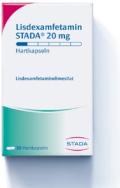
Stada Arzneimittel, a pharmaceutical company in Germany, has brought an action against two Japanese pharmaceutical companies seeking the invalidation of the Danish supplementary protection certificate (SPC) for medicinal products. They hold a protection certificate for the ADHD medication “dexamfetamine”. The dispute concerns whether that certificate also confers protection on the medication “lisdexamfetamine” (which is a derivative of the active substance dexamfetamine), or whether that medication requires a separate (or additional) supplementary protection certificate. Underlying this is the question of the meaning of “product” and “active ingredient” within the meaning of Article 1(b) of the Regulation.
Is it sufficient that the derivative is protected by its own patent? Or that it has been classified by the medicinal authorities as a “new active substance”? If not, what criteria determine whether a derivative constitutes an independent active substance?
Preliminary questions:
(1) Must a derivative, such as lisdexamfetamine, of an active ingredient, such as dexamfetamine, in accordance with the Opinion of AdvocateGeneral Henrik Saugmandsgaard Øe of 13 December 2018 in Case C-443/17, Abraxis Bioscience LLC v Comptroller General of Patents, footnote 76, be considered to be an independent active ingredient, which thus comes within the concept of ‘product’ within the meaning of Article 1(b) of Regulation (EC) No 469/2009 of the European Parliament and of the Council of 6 May 2009 concerning the supplementary protection certificate for medicinal products (SPC Regulation), if:
(a) the derivative itself is protected by a patent or
(b) the derivative in connection with the grant of a marketing authorisation is considered to be a new active substance within the meaning of Article 10(2)(b) of Directive 2001/83/EC of the European Parliament and of the Council of 6 November 2001 (consolidated version) on the Community code relating to medicinal products for human use (Medicinal Products Directive)?
If the fact that a derivative such as lisdexamfetamine enjoys independent patent protection or is classified as a new active substance under Article 10(2)(b) of the Medicinal Products Directive does not mean that it must be considered to be an independent active ingredient, what conditions must a derivative, such as lisdexamfetamine, of an active ingredient satisfy in order to be considered to be an independent active ingredient coming within the concept of ‘product’ within the meaning of Article 1(b) of the SPC Regulation?
(2) Are there any limitations on judicial review by a court of a Member State in a case such as the present case concerning the alleged invalidity of a supplementary protection certificate, including limitations similar to those referred to in the judgment of the General Court of 5 May 2021 in Case T-611/18, Pharmaceutical Works Polpharma S.A v European Medicines Agency (EMA) ECLI:EU:T:2021:241, paragraphs 164 to 172, which concerned judicial review by the General Court and the Court of Justice in cases regarding applications for marketing authorisation for medicinal products?