














Article 5(3) of Directive [2001/29] (InfoSoc-Directive): the exception for 'pastiche' does not have a catch-all nature, but covers creations which evoke one or more existing works, while being noticeably different from them, and which use, including by means of sampling, some of those works’ characteristic elements, in order to engage with those works in an artistic or creative dialogue that is recognisable as such, in particular the form of an overt stylistic imitation of those works, of a tribute to them or of humorous or critical engagement with them. It is sufficient that the ‘pastiche’ nature be recognisable for a person who is familiar with the existing work from which the elements have been borrowed.
COPYRIGHT - RELATED RIGHTS - NEIGHBOURING RIGHTS
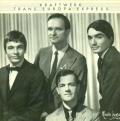
CG and YN, submit that Pelham and Others electronically copied (sampled) approximately two seconds of a rhythm sequence from the song ‘Metall auf Metall’ and used that sample in a continuous loop in the song ‘Nur mir’, although it would have been possible for them to record that sequence themselves. CG and YN’s principal claim is that Pelham and Others infringed their copyright-related right that they hold as phonogram producers. They allege, in the alternative, infringement of the related right which they hold as performers and, in the further alternative, infringement of CG’s copyright over the musical work. Lastly, in the further alternative, they allege that Pelham and Others infringed the rules on competition penalising free-riding. The court of first instance upheld the claim. The defendants’ appeal was dismissed. Following the defendants’ appeal on points of law, the case was referred back to the court of appeal. After the second appeal was again dismissed and the subsequent appeal on points of law was unsuccessful, the Federal Constitutional Court quashed the judgments on points of law and the second judgment on appeal and referred the case back to the referring court.
By the judgment of 29 July 2019, Pelham and Others (C‑476/17, EU:C:2019:624) (IPPT20190729), the Court of Justice held, inter alia, that Article 2(c) of Directive 2001/29 must, in the light of the Charter of Fundamental Rights of the European Union (‘the Charter’), be interpreted as meaning that the phonogram producer’s exclusive right under that provision to authorise or prohibit the reproduction of his or her phonogram allows him or her to prevent another person from using a sound sample, even if very short, of his or her phonogram for the purposes of including that sample in another phonogram, unless that sample is included in that other phonogram in a modified form unrecognisable to the ear. The Court also held that Article 9(1)(b) of Directive 2006/115 must be interpreted as meaning that a phonogram which contains sound samples transferred from another phonogram does not constitute a ‘copy’, within the meaning of that provision, of that phonogram, since it does not reproduce all or a substantial part of that phonogram. By judgment of 30 April 2020, the Bundesgerichtshof (Federal Court of Justice) set aside the judgment of the Oberlandesgericht Hamburg (Higher Regional Court, Hamburg) of 7 June 2006 and referred the case back to that latter court. By judgment of 28 April 2022, the Oberlandesgericht Hamburg (Higher Regional Court, Hamburg) varied the judgment of the Landgericht Hamburg (Regional Court, Hamburg) of 8 October 2004.
By its first question, the referring court asks, in essence, whether Article 5(3)(k) of Directive 2001/29 must be interpreted as meaning that the exception for ‘pastiche’, within the meaning of that provision, has a catch-all nature (Auffangtatbestand) which covers, at the very least, any artistic engagement with an existing work, including in the form of sampling, without it being necessary for that engagement to be an expression of humour, a stylistic imitation or a tribute. According to the referring court, that question is decisive for the outcome of the dispute in the main proceedings, in the light of the finding, made by the Oberlandesgericht Hamburg (Higher Regional Court, Hamburg), that the song ‘Nur mir’ evokes the rhythm sequence taken from the song ‘Metall auf Metall’, while being noticeably different from it, but is neither a stylistic imitation of that rhythm sequence nor an expression of humour or mockery. That court also found that the song ‘Nur mir’ artistically engages with that rhythm sequence, inasmuch as that sequence is reproduced in a song of a different music genre, while being, despite the reduction in tempo and the metric modulation, recognisable as alluding to the original. By its second question, the referring court asks, in essence, whether Article 5(3)(k) of Directive 2001/29 must be interpreted as meaning that, in order for use to be ‘for the purpose’ of pastiche, within the meaning of that provision, a finding is necessary that the user wishing to rely on that provision intended to use an existing work for that purpose, or whether it is sufficient that the ‘pastiche’ nature be recognisable for a person who is familiar with that existing work and who has the requisite intellectual understanding, since the Oberlandesgericht Hamburg (Higher Regional Court, Hamburg) took the view that such an intention was not required and that it was therefore not necessary to make findings in that regard.
Preliminary questions:
‘(1) Is the provision limiting use for the purpose of pastiche within the meaning of Article 5(3)(k) of Directive [2001/29] … catch-all [in nature (Auffangtatbestand)] at least for artistic engagement with a pre-existing work or other object of reference, including sampling? Is the concept of pastiche subject to limiting criteria, such as the requirement of humour, stylistic imitation or tribute?
(2) Does use “for the purpose of” pastiche within the meaning of Article 5(3)(k) of Directive [2001/29] require the determination of an intention on the part of the user to use copyright subject matter for the purpose of a pastiche, or is it sufficient for the pastiche character to be recognisable for a person familiar with the copyright subject matter who has the intellectual understanding required to perceive the pastiche?’
(1) Article 5(3)(k) of Directive 2001/29/EC of the European Parliament and of the Council of 22 May 2001 on the harmonisation of certain aspects of copyright and related rights in the information society must be interpreted as meaning that the concept of ‘pastiche’, within the meaning of that provision, covers an artistic creation which (i) evokes an existing work, by adopting its distinctive ‘aesthetic language’ while (ii) being noticeably different from the source imitated, and (iii) is intended to be recognised as an imitation. The purpose pursued with that overt stylistic imitation is irrelevant. The use of protected elements from works or other subject matters, including ‘samples’ of phonograms, falls under the corresponding exception where it results in an artistic creation presenting those essential characteristics.
(2) Article 5(3)(k) of Directive 2001/29 must be interpreted as meaning that the use of a protected work or other subject matter must be regarded as being ‘for the purpose of … pastiche’ within the meaning of that provision where the ‘pastiche’ character of that use is recognisable by a person familiar with the protected material reused and who has the intellectual understanding required to perceive the ‘pastiche’.
Answer CJEU:
(1) Article 5(3)(k) of Directive 2001/29/EC of the European Parliament and of the Council of 22 May 2001 on the harmonisation of certain aspects of copyright and related rights in the information society must be interpreted as meaning that the concept of ‘pastiche’, within the meaning of that provision, covers an artistic creation which (i) evokes an existing work, by adopting its distinctive ‘aesthetic language’ while (ii) being noticeably different from the source imitated, and (iii) is intended to be recognised as an imitation. The purpose pursued with that overt stylistic imitation is irrelevant. The use of protected elements from works or other subject matters, including ‘samples’ of phonograms, falls under the corresponding exception where it results in an artistic creation presenting those essential characteristics.
(2) Article 5(3)(k) of Directive 2001/29 must be interpreted as meaning that the use of a protected work or other subject matter must be regarded as being ‘for the purpose of … pastiche’ within the meaning of that provision where the ‘pastiche’ character of that use is recognisable by a person familiar with the protected material reused and who has the intellectual understanding required to perceive the ‘pastiche’.
IPPT version will follow