














ECHR: Photo politicians family next to Goebbels family in satirical section magazine
10-02-2026 Print this page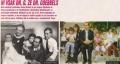
Freedom of expression – Civil sanctions imposed on a publisher for printing a photo of a well-known politician and his family alongside a photo of the family of Nazi politician Joseph Goebbels in the satirical section of a weekly magazine. The domestic courts were required to balance the publisher’s right to freedom of expression against the politician’s rights, rather than those of his family members, who had obtained compensation in separate domestic proceedings. The courts failed to sufficiently consider the broader context of the publication, including its satirical nature and its limited impact on the magazine’s audience. The interference with freedom of expression was therefore not “necessary in a democratic society.”
The applicant company published the Slovenian weekly magazine Mladina, which included a satirical section (“Mladinamit”). In 2011, amid public debate over a Facebook post comparing politician B.G. to Nazi propagandist Joseph Goebbels, Mladina published an editorial and a satirical article mocking the controversy and drawing parallels between B.G.’s political methods and those of Nazi figures. The satirical article displayed side-by-side photographs of Goebbels’ family and B.G.’s family, taken from a public religious event, accompanied by provocative captions. The publication sparked strong criticism from politicians, journalists, and the Human Rights Ombudsman, particularly over the involvement of children. Mladina’s editor-in-chief defended the publication in a subsequent issue, arguing that the media applied double standards and that B.G. had publicly involved his children for political purposes.
The Court found that the domestic judgments against Mladina constituted an interference with freedom of expression under Article 10, pursued a legitimate aim (protection of reputation), but were not “necessary in a democratic society.” While the comparison of B.G.’s family photo with that of Nazi official Joseph Goebbels affected B.G.’s reputation and engaged Article 8, the domestic courts failed to properly balance the competing rights.
The Court stressed that satire merits heightened protection, that B.G. was a public figure who had exposed his family in a political context, and that the publication contributed to a debate of public interest about political methods. It emphasised the satirical context, limited audience impact, and that Nazi comparisons are not automatically defamatory when linked to a political critique. The domestic courts focused excessively on the photographs’ impact without adequately considering context, satire, and proportionality, and no serious harm to B.G.’s reputation was demonstrated.
Overall, the Court held that the domestic courts did not show a pressing social need to restrict the magazine’s expression, and therefore the interference violated Article 10 of the Convention.
IPPT-version will follow anytime soon