














CJEU about the originality, concept of work and copyright infringement for complex works of complex work of applied art
04-12-2025 Print this page
There is no relationship of rule and exception between design protection and copyright protection, such that, when assessing the originality of subject matter of applied art, it is necessary to apply stricter requirements than are laid down for other types of subject matter. 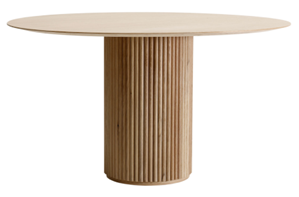
Concurrent protection by copyright and design protection is limited to certain situations, since an author is deemed to create a unique work bearing the imprint of his or her personality, which, as such, is protected in accordance with Directive 2001/29.
Work: the requirement that the author’s personality be reflected in the subject matter for which protection is claimed, through the expression of that author’s free and creative choices, is decisive for the concept of ‘originality’ and, consequently, for copyright protection under EU law.
Design: the criterion of novelty and individual character is assessed by reference to earlier designs and, in that context, any design which is sufficiently distinctive to create a different overall visual impression may qualify for protection.
The purpose of design protection is to protect subject matter which, while being new and distinctive, is functional and liable to be mass-produced. Further, that protection is to apply for a limited time, but sufficient time to ensure a return on the investment necessary for the creation and production of that subject matter, without thereby excessively restricting competition.
Copyright protection, the duration of which is significantly greater, is reserved to subject matter that merits being classified as works. The grant of copyright protection to subject matter that is protected as a design must not have the consequence that the respective objectives and effectiveness of those two forms of protection are undermined.
It follows that,
first, subject matter protected as a design is not as a general rule capable of being treated in the same way as subject matter constituting works;
second, there is no automatic connection between the grant of protection under the law on designs and protection under the law of copyright;
third, the conditions for such protection, namely novelty and individual character, on the one hand, and originality, on the other, must not be confused.
Free and creative choices by the author.
Cannot be presumed. Thus, the court before which the question of the originality of a utilitarian object is brought must seek out and identify the creative choices in the shape of that subject matter in order to be able to declare it protected by copyright, it being specified that even where the author has made choices that are not dictated by technical or other constraints, it cannot be presumed that those choices are creative, for the purposes of copyright.
Choices dictated by various constraints, particularly technical, which bound that author during the creation of that subject matter are not free and creative, and nor are choices which, while free, do not bear the imprint of the author’s personality by giving that subject matter a unique appearance.
Circumstances such as the author’s intentions during the creative process, his or her sources of inspiration and the use of shapes that are already available, the likelihood of a similar independent creation or the recognition of that subject matter in professional circles may be taken into account where appropriate, but are not, in any event, necessary or decisive for the purpose of establishing the originality of the subject matter for which protection is claimed.
In order to establish a copyright infringement, it is necessary to determine whether creative elements of the protected work have been reproduced in a recognisable manner in the allegedly infringing subject matter. The same overall visual impression created by the two subject matters at issue and the degree of originality of the work concerned are irrelevant. The possibility of a similar creation cannot justify a refusal to grant protection.
IPPT20251204, CJEU, Mio v Asplund & USM v Konektra
ECLI:EU:C:2025:941 and Case C-580/23 and C-795/23