









Advertising using health claims relating to botanical substances is currently prohibited
09-05-2025 Print this page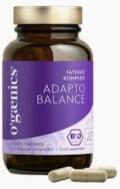
Advertising with health claims relating to botanical substances in food supplements temporarily prohibited: Health claims describing of referring to psychological or behavioural functions may be used only if they are based on scientific evidence and are well understood by the average consumer. The use of health claims relating to botanical substances is not permitted as long as the Commission has not completed the examination of such claims. This interpretation is not called into question by the principle of freedom to conduct a business.
Case C-386/23 Novel Nutriology
The defendant sells the dietary supplement “o’gaenics Adapto-Genie ANTI-STRESS-KOMPLEX.” On her website, she advertised this product and claimed that the ingredients “saffron extract” and “melon juice extract” contribute, among other things, to an improved mood and a better quality of life.
According to the claimant, these claims constitute unauthorized health claims within the meaning of Article 10 of Regulation No. 1924/2006. He therefore requested the defendant to issue a cease-and-desist declaration. The defendant did not comply with this request. As a result, the claimant turned to the German court of first instance and requested that the defendant be prohibited from using the above-mentioned claims in commercial advertising for the dietary supplement. The referring court granted the claim. The defendant's appeal against this decision was rejected. The defendant then filed a “Revision” appeal with the referring court.
Preliminary question:
1. May plant or herbal substances (“[botanical substances]”) be advertised with health claims (Article 10(1) of Regulation No 1924/2006) or with references to general, non-specific benefits of the nutrient or food for overall good health or health-related well-being (Article 10(3) of Regulation No 1924/2006) without those claims being authorised under that regulation and included in the list of authorised claims pursuant to Articles 13 and 14 of [that regulation] (Article 10(1) of [Regulation No 1924/2006]) or without those references being accompanied by a specific health claim contained in one of the lists referred to in Articles 13 or 14 of [that regulation] (Article 10(3) of [Regulation No 1924/2006]), pending completion of the evaluation by [EFSA] and the examination by the Commission of the inclusion of the claims notified in respect of “[botanical substances]” in the Community lists referred to in Articles 13 and 14 of Regulation No 1924/2006?
Answer:
Article 10(1) and (3) of Regulation (EC) No 1924/2006 [Claims regulation],
must be interpreted, in the context of commercial advertising of a food supplement composed of ‘botanical substances’ within the meaning of Commission Regulation (EU) No 432/2012 of 16 May 2012 establishing a list of permitted health claims made on foods, other than those referring to the reduction of disease risk and to children’s development and health, as meaning that it is not permitted, until the European Commission has completed its examination of health claims relating to botanical substances for the purposes of their inclusion in the lists of authorised health claims provided for in Articles 13 and 14 of Regulation No 1924/2006, as amended, to use specific health claims relating to such substances and describing or referring to psychological or behavioural functions, or to make reference to the general, non-specific benefits of such a substance for overall good health and health-related well-being without that reference being accompanied by a specific health claim included in those lists, unless the use of such claims is permitted under Article 28(6) of that regulation.
IPPT20250430_CJEU_Novel_Nutriology_.pdf
ECLI:EU:C:2025:304 and case C‑386/23