














AG: No Due Cause for Political Use of the IKEA Trademark by Vlaams Belang
24-11-2025 Print this page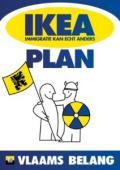
The notion of due cause can balance trademark protection and freedom of expression. However, the proprietor of a trademark with a reputation need not tolerate a third party’s use of an identical or similar sign when such use mainly seeks to exploit the mark’s reputation to promote a political programme. If the programme has no real link to the mark, its owner, or its goods or services, no due cause exists to justify the use.
Case C-298/23 IKEA v Vlaams Belang
Questions (B9 16545):
1. Can freedom of expression, including the freedom to express political opinions and political parody, as guaranteed by Article 10 [ECHR] and Article 11 of the [Charter], constitute “due cause” for using a sign identical or similar to a well-known trade mark within the meaning of Article 9(2)(c) of [Regulation 2017/1001] as well as Article 10(2)(c) and Article 10(6) of [Directive 2015/2436]?2. If so, what are the criteria to be taken into account by the national court in assessing the balance between those fundamental rights, and the importance to be attached to each of them?
3. In particular, can the national court take into account the following criteria, and/or are there additional criteria:
– the extent to which the expression has a commercial character or purpose;
– the extent to which competitive motives are at play between parties;
– the extent to which the expression has a public interest, is socially relevant or opens a debate;
– the relationship between the above criteria;
– the degree of reputation of the trade mark invoked;
– the extent of the infringing use, its intensity and systematic nature and the extent of its distribution, by territory, time and volume, also taking into account the extent to which this is proportionate to the message that the expression is intended to convey;
– the extent to which the expression, and circumstances accompanying that expression, such as the name of the expression and its promotion, are detrimental to the reputation, distinctive character and image of the trade marks invoked (the “advertising function”);
– the extent to which the expression exhibits its own original contribution and the extent to which an attempt has been made to avoid confusion or association with the trade marks invoked, or the impression that there is a commercial or other connection between the expression and the trade mark proprietor (the “origin function”), also taking into account the manner in which the trade mark proprietor has built up a certain image and reputation in advertising and communication?
Conclusion AG:
Recourse to the concept of ‘due cause’, within the meaning of Article 10(2)(c) of Directive (EU) 2015/2436 of the European Parliament and of the Council of 16 December 2015 to approximate the laws of the Member States relating to trade marks and of Article 9(2)(c) of Regulation (EU) 2017/1001 of the European Parliament and of the Council of 14 June 2017 on the European Union trade mark, may serve as a mechanism for satisfying the requirements of protection of freedom of expression, as guaranteed by Article 11 of the Charter of Fundamental Rights of the European Union, in the field of trade mark law.
The proprietor of a trade mark with a reputation cannot be compelled, by virtue of ‘due cause’, to tolerate, in the absence of another valid justification, the use by a third party of a sign identical with, or similar to, its trade mark, where the potential contribution of the mark to the debate of public interest does not outweigh the fact that that use must be understood as an attempt to ride in the wake of a trade mark with a reputation in order to disseminate and promote a political programme. That is the case where the programme does not raise issues relating to that mark, its proprietor or the proprietor’s goods or services.
ECLI:EU:C:2025:886 and Case C-298/23