Confidentiality order and restriction of access (Rule 262A RoP, Article 58 UPCA). Prima facie evidence of trade secrets. The existence of a trade secret does not have to be established to the court's satisfaction, but it is sufficient if this is predominantly probable.
IPPT20231027, UPC CFI, LD Hamburg, 10x Genomics v Vizgen
Case law
Extension of time to file Statement of Defense with the period of time that the plaintiffs allowed to elapse with the subsequent submission of the annexes.
WIPO Arbitration and Mediation Administrative Panel Decision. Moooi B.V. opposes the domain names <moooifurniture.shop> and <moooisale.com> . According to Moooi, the domain names are confusingly similar to the trademarks MOOOI while the defendants have no rights to or legitimate interests in the disputed domain names...
A legitimate and real concern that a possible cost order might not be recoverable and/or the likelihood that a possible cost order by the UPC may not, or in an unduly burdensome way, be enforceable
IPPT20231020, UPC CFI, LD Helsinki, AIM Sport Vision v Supponor
Case law
UPC lacks competence because withdrawal of opt-out on 5 July 2023 is ineffective due to national infringement and invalidity proceedings brought before German national courts, which were pending on 1 June 2023 (Article 32 UPCA, Article 83 UPCA, Rule 5 RoP). Irrelevant whether same parties are involved in the national...
IPPT20231018, UPC CFI, President, Plant-e v Arkyne
Case law
Language of the proceedings changed from Dutch into English (Article 49 UPCA, Rule 323 RoP). Both parties have a good command of English, which is one of their working languages and also the language in which the exchanges prior to the infringement action have been conducted. Consequently, the use of English would not...
IPPT20231018, UPC CFI, LD Düsseldorf, myStromer v Revolt Zycling
Case law
Recurring penalty payments are imposed on the basis of article 82(4) UPCAand not governed by provisions of national enforcement law (Article 82(4) UPCA, Rule 354 RoP). Provision of article 82(3) UPCA is superseded by Art. 82 (4) UPCA in conjunction with R. 354.3 and .354.3 RoP
IPPT20231011, UPC CFI, RD Nordic-Baltic, Ocado v Autostore
Case law
Availability to the public of pleadings or evidence.Article 45 UPCA means that the written procedure of the Court shall, in principle, be open to the public unless the Court decides to make it confidential,
IPPT20231011, UPC CFI, CD Munich, Astellas v Healios
Case law
Parties are under an obligation to use the CMS and the dedicated workflows in the CMS to file their submissions (see e.g. Rule 4.1 RoP). It is the sole responsibility of the parties that this is done properly and timely. The Court will try to be helpful where possible in resolving CMS related issues. Submissions and...
Extension and alignment of deadline for lodging Statement of Defence granted as agreed. Extension and alignment of deadline for lodging Preliminary Objection because of procedural advantage and representative for defendants helping to make a prompt and successful service of the Statement of Claim possible though...
Consent by holders of copyright and related rights is required to be obtained only in the Member State in which the program-carrying signals are introduced into the communication chain running to the satellite. Such communication to the public by satellite is deemed to take place only in the Member State in which the...
IPPT20231004, UPC CFI, CD Munich, Nanostring v Harvard
Case law
Preliminary objection is to be dealt with in the main proceedings for reasons of procedural economy and efficiency (Rule 20.2 RoP). The Court in its Preliminary Order also expressed its understanding that the Preliminary objection relates to the Court´s jurisdiction only in respect of the German part of the European...
Pursuant to Rule 262A(4) RoP, the representative of the other parties must be invited to submit written comments prior to making any order. However, in the interest of effective protection of secrets, the requirement to be heard before issuing an order only applies to the final order of a secrecy order and access...
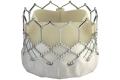
IPPT2023929, UPC CFI, LD Munich, Edwards Lifesciences v Meril
Case law
Use of official forms available online, which also include separate workflows within the CMS, required (Rule 4(1) RoP). No security for the legal costs and other expenses (Rule 158 RoP) ordered. It requires a showing that the financial circumstances of the other party give rise to fears that any claim for...
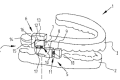
IPPT2023921, UPC CFI, LD Brussels, Nelissen v OrthoApnea
Case law
Urgency and irreparable because evidence may soon no longer be available in the territory. Ex parte (Rule 197(1) RoP): The applicant has sufficiently explained that irreparable damage may be caused to if the defendant is heard, because it is feared that in that case the infringing products will no longer be available...
Rule 262(1) RoP requires that the application be made by a third party - private or public - with respect to the parties to the proceedings. A lawyer who declares himself to be the defendant's advocate, asserting that he only has the power of attorney to access the documents of the proceedings but not to enter an...
IPPT20230920, UPC CFI, CD Munich, Sanofi-Aventis v Amgen
Case law
Rule 262(1)(b) RoP requires a concrete, verifiable and legally relevant reason, i.e. more than just any (fictitious) reason. In other words: a legitimate reason is required for making available written pleadings and evidence to a member of the public. Otherwise, this provision and the distinction made would seem to be...
Valid service Statement of claim on 4th defendant via 1st defendant, who is one of its directors. In the opinion of the Local Division, knowledge may be presumed pursuant to Rule 275(2) RoP if either a legal relationship exists after which knowledge may be imputed or concrete circumstances exist which establish...
IPPT20230908, UPC CFI, RD Nordic-Baltic, Ocado v Autostore
Case law
Withdrawal of action prior to final decision because of settlement (Rule 265 RoP). Claimant shall be reimbursed by 60 % of EUR 31.000, which is EUR 18.600.
In its decision of 10 October 2023 in G1/22 and G2/22 the Enlarged Board of Appeal of the EPO ruled that it is is competent to assess whether a party is entitled to claim priority under Article 87(1) EPC. The Enlarged Board underscored that a distinction is to be made between (a) the title to a European patent...